
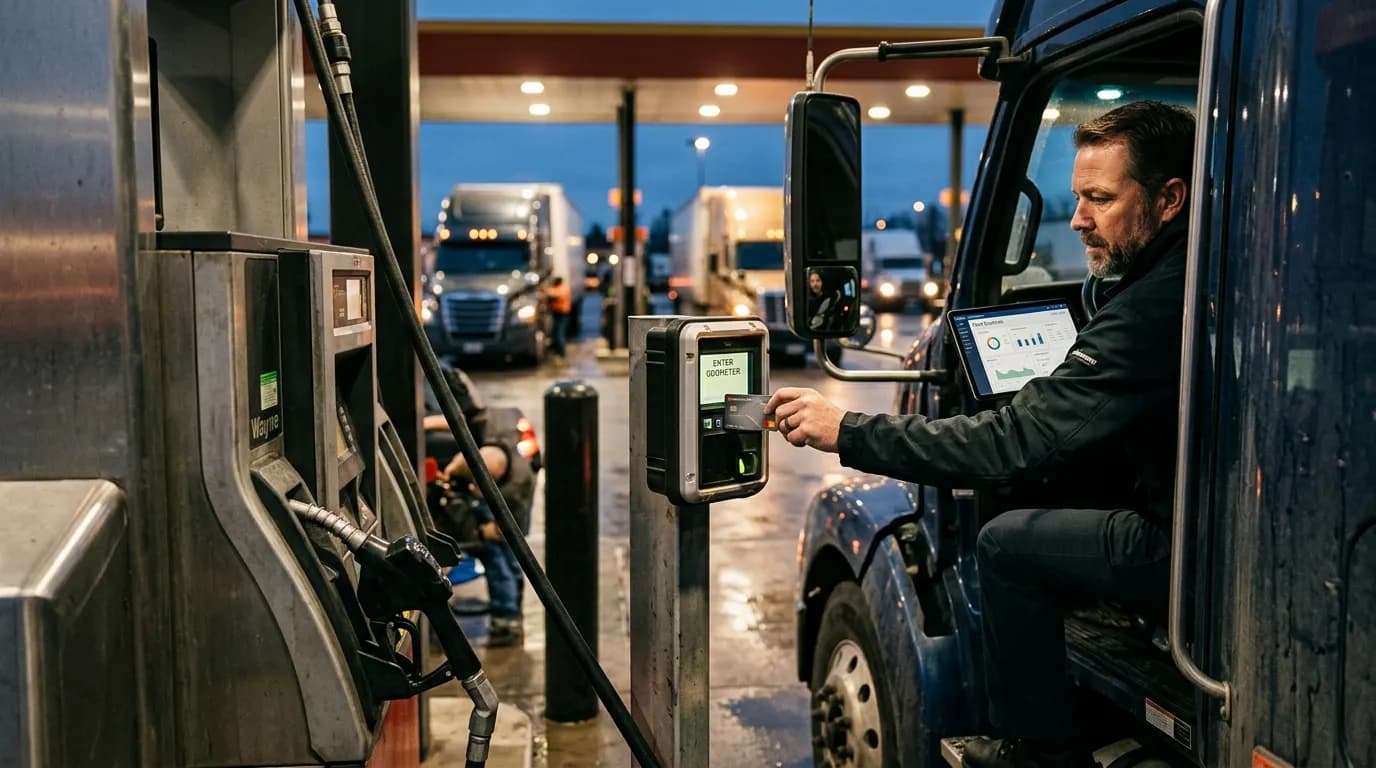
Fuel: Your Second-Largest Expense
For most FedEx ISP owners, fuel is the second-largest operating expense after driver payroll. A fleet of 8-10 delivery vehicles can easily spend $8,000-$15,000 per month on fuel, depending on vehicle type, route mileage, and fuel prices.
With that much money flowing through fuel cards every month, even small improvements in how you manage fuel purchasing can add up to significant savings. And poor management — including fraud, waste, and missed optimization opportunities — can cost you thousands.
Here are the fuel card management best practices every fleet owner should follow.
Choosing the Right Fuel Card Program
Not all fuel cards are created equal. Key factors to consider:
Network Coverage
Make sure the fuel card is accepted at stations along your routes. A card with a great discount at one chain is useless if there are no stations from that chain in your CSA.
Discount Structure
Fuel card programs offer discounts in different ways:
- Per-gallon discounts — a fixed discount (e.g., $0.05-$0.10 per gallon) at network stations
- Volume-based rebates — larger discounts as your monthly volume increases
- Negotiated fleet pricing — some programs negotiate station-level pricing for large fleets
Compare the effective discount across programs based on your actual purchasing patterns.
Transaction Controls
The best fuel card programs allow you to set controls at the card level:
- Fuel-only purchases (no merchandise)
- Daily and weekly dollar limits
- Gallon-per-transaction limits
- Time-of-day restrictions
- Geographic restrictions
- Fuel grade restrictions
These controls are your first line of defense against fraud and misuse.
Reporting and Data
Look for programs that provide detailed, downloadable transaction data including:
- Date, time, and location of purchase
- Gallons purchased
- Price per gallon
- Fuel grade
- Card number and assigned driver/vehicle
- Odometer reading (if captured)
This data feeds into your fuel card management system and is essential for cost analysis, fraud detection, and driver accountability.
Assigning and Managing Cards
One Card Per Vehicle, Not Per Driver
Assign fuel cards to vehicles, not to individual drivers. This way:
- Transactions automatically associate with the correct vehicle
- You can track fuel efficiency per vehicle
- When drivers change vehicles (due to maintenance, rotation, etc.), you do not need to swap cards
- If a driver is terminated, you deactivate their access without affecting the vehicle's card
Document Assignment
Maintain a log of which card is assigned to which vehicle and which driver typically operates that vehicle. Update this log whenever assignments change.
Secure Storage
Cards should be stored in the vehicle (locked glove box or card holder) when not in use. Do not let drivers carry cards home. Lost cards should be reported and deactivated immediately.
Monitoring and Reconciliation
Weekly Review
Set aside 15-20 minutes each week to review fuel card transactions. Focus on:
- Transactions outside work hours — any purchases before 6 AM or after 7 PM
- Weekend transactions — unless you operate weekends
- Excessive gallon counts — any single transaction exceeding the vehicle's tank capacity
- Non-fuel purchases — merchandise or services
- Geographic outliers — purchases outside your CSA area
- Frequency anomalies — daily fueling when every-other-day should be sufficient
Monthly Reconciliation
Monthly, reconcile total fuel spending against:
- Total fleet mileage
- Expected fuel efficiency (MPG) per vehicle
- Route mileage data
- Budget projections
Calculate your cost per mile for fuel: Total fuel spend / Total fleet miles. Track this metric monthly. If it increases without a corresponding rise in fuel prices, investigate.
MPG Tracking
Track miles per gallon for each vehicle. Significant drops in MPG can indicate:
- Maintenance issues (dirty air filter, tire pressure, alignment)
- Driver behavior (excessive idling, aggressive driving)
- Fuel diversion or fraud
- Wrong fuel grade being used
Reducing Fuel Costs
Station Selection
Fuel prices can vary $0.10-$0.30 per gallon between stations in the same area. Encourage drivers to fuel at the lowest-cost stations along their routes. Some fuel card programs provide station-level pricing data to help identify the cheapest options.
Fill-Up Timing
Fuel prices tend to be lower early in the week (Monday-Wednesday) and higher toward the weekend. While this is not always the case, establishing a fueling schedule for Monday/Tuesday can yield modest savings over time.
Vehicle Maintenance
Well-maintained vehicles use less fuel. Underinflated tires alone can reduce fuel efficiency by 3%. A regular maintenance schedule that includes:
- Tire pressure checks (weekly)
- Air filter replacement (per manufacturer schedule)
- Engine tune-ups (per manufacturer schedule)
- Proper oil changes (per manufacturer schedule)
can improve fleet-wide MPG by 5-10%.
Driver Behavior
Driver behavior significantly affects fuel consumption. Encourage:
- Smooth acceleration and braking
- Minimal idling (turn off the engine during extended stops)
- Speed compliance (fuel efficiency drops significantly above 55 MPH)
- Route efficiency (minimize unnecessary mileage)
Right-Sizing Vehicles
If you have a step van on a route that a cargo van could handle, you are burning unnecessary fuel. Match vehicle size to route requirements.
Fuel Deductions and Payroll
If you deduct fuel costs from driver pay — a common practice among ISPs — manage this carefully:
- Get written consent before deducting fuel costs from wages (required by law in most states)
- Deduct actual costs, not estimates — use fuel card transaction data for accuracy
- Do not deduct more than necessary — over-deducting creates legal liability
- Show deductions clearly on pay stubs — transparency prevents disputes
For more on fuel deductions, see our complete guide to fuel deductions for ISP owners.
Integrating Fuel Data With Payroll
The most efficient approach to fuel card management integrates fuel data directly into your payroll process. When fuel transactions flow into the same system that processes driver pay, you can:
- Automatically apply fuel deductions to the correct driver's paycheck
- Calculate fuel cost per route alongside driver cost per route
- Generate comprehensive profitability reports including fuel
- Eliminate manual data transfer between fuel card statements and payroll spreadsheets
FleetWage's fuel card management tools integrate fuel data with payroll processing, giving you a unified view of your operating costs. Schedule a demo to see how fuel and payroll work together.